
The Wanderer
4 min read
“Ask him to stay and he will tell you about the next valley.” Saying of the Turning
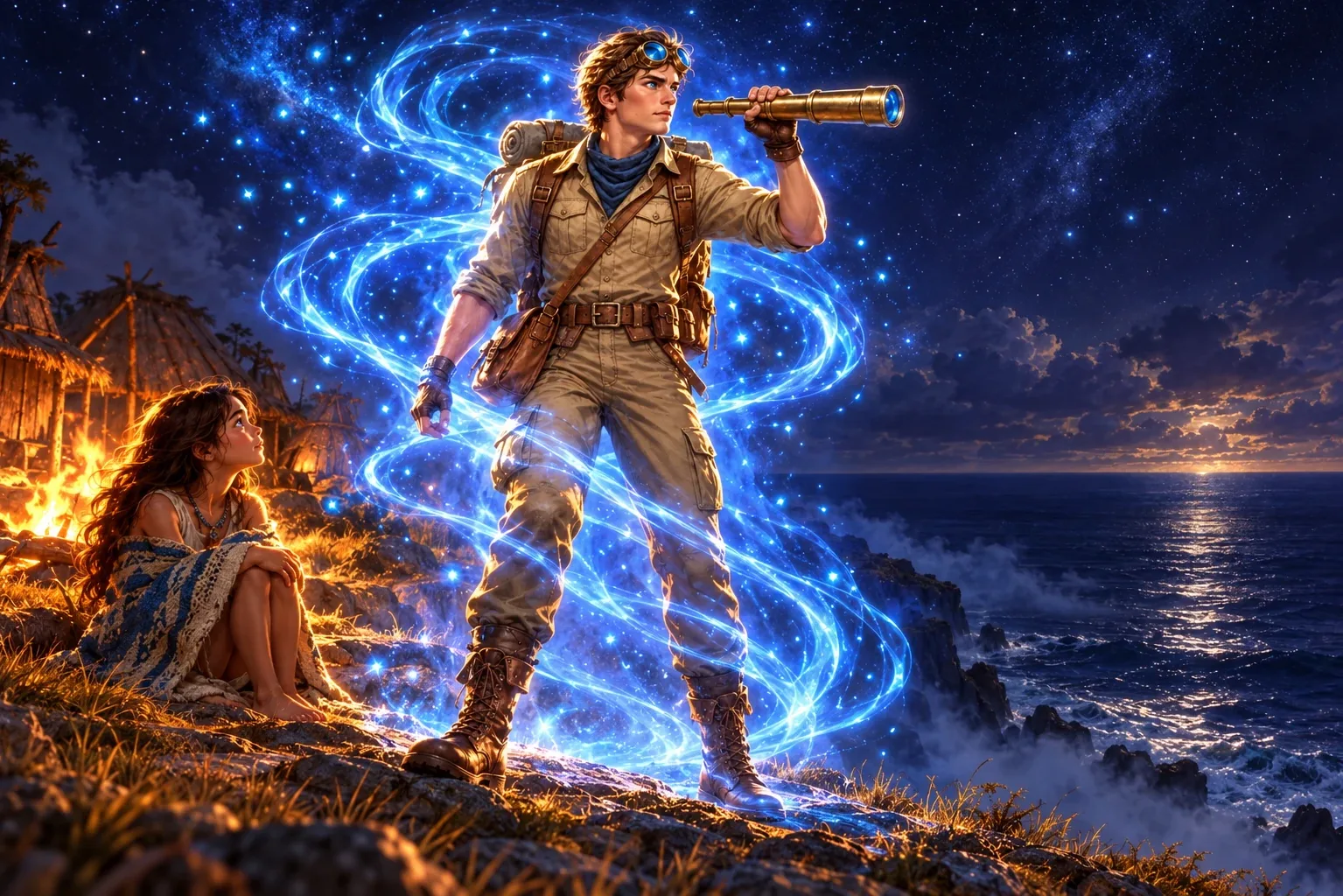
He was born at the edge of the firelight.
It was a fire of the Turning, on a high headland over the sea, and a girl sat at the edge of its light with her back to the flames, looking out at the dark, where her father's boat had gone and not come back. Behind her the village slept. In front of her was everything she did not know.
The wind came up off the sea. It came in a spiral, blue and full of small lights, and it turned once about the headland, and twice, and the third time there was someone standing in it.
He looked like one of them, and he did not. He was young and lean and brown-haired, and his eyes were the bright blue of the sky just after the sun goes down. He wore the plain tan cloth and leather of a traveller, belted and strapped and pocketed, with a pack on his back and a bedroll on the pack, as though he had been walking already for a long time, and had a long way yet to go. On his brow sat a pair of lenses of blue glass in brass, for looking into the wind. In his hand was a brass glass for looking further. The blue wind never left him. It turned about him wherever he went, and it carried the small lights with it.
He was not a flicker. He was the answer to a need held by every person at the edge of every firelight in the world, and he was solid as stone.
The girl asked him if he had seen her father's boat.
He turned and looked out to sea through the brass glass, a long time. Then he told her where it was: on a sandbank two days to the south, its mast broken, her father alive upon it. He told her how the currents ran there, and where the rocks were.
They found him. It was the first thing the Explorer ever did.
He did not stay.
He could not. He was the answer to what is out there, and an answer cannot choose to be silent. As Vael had been unable to stop giving, he was unable to stop going. Every valley had a next valley. Every shore had a far shore. He would hear of a place, or see a line of hills, or merely feel the wind change, and he was gone.
He walked the whole world.
He walked north along Kharn's arm and up into the high passes, where no person had ever been, and came out above the clouds on a ridge of ice, and saw a face in the cliffs below him: vast, old, grave, eyes closed, bearded with glaciers. He looked at it a long time. He was the first in the age of people to see it and know it for what it was.
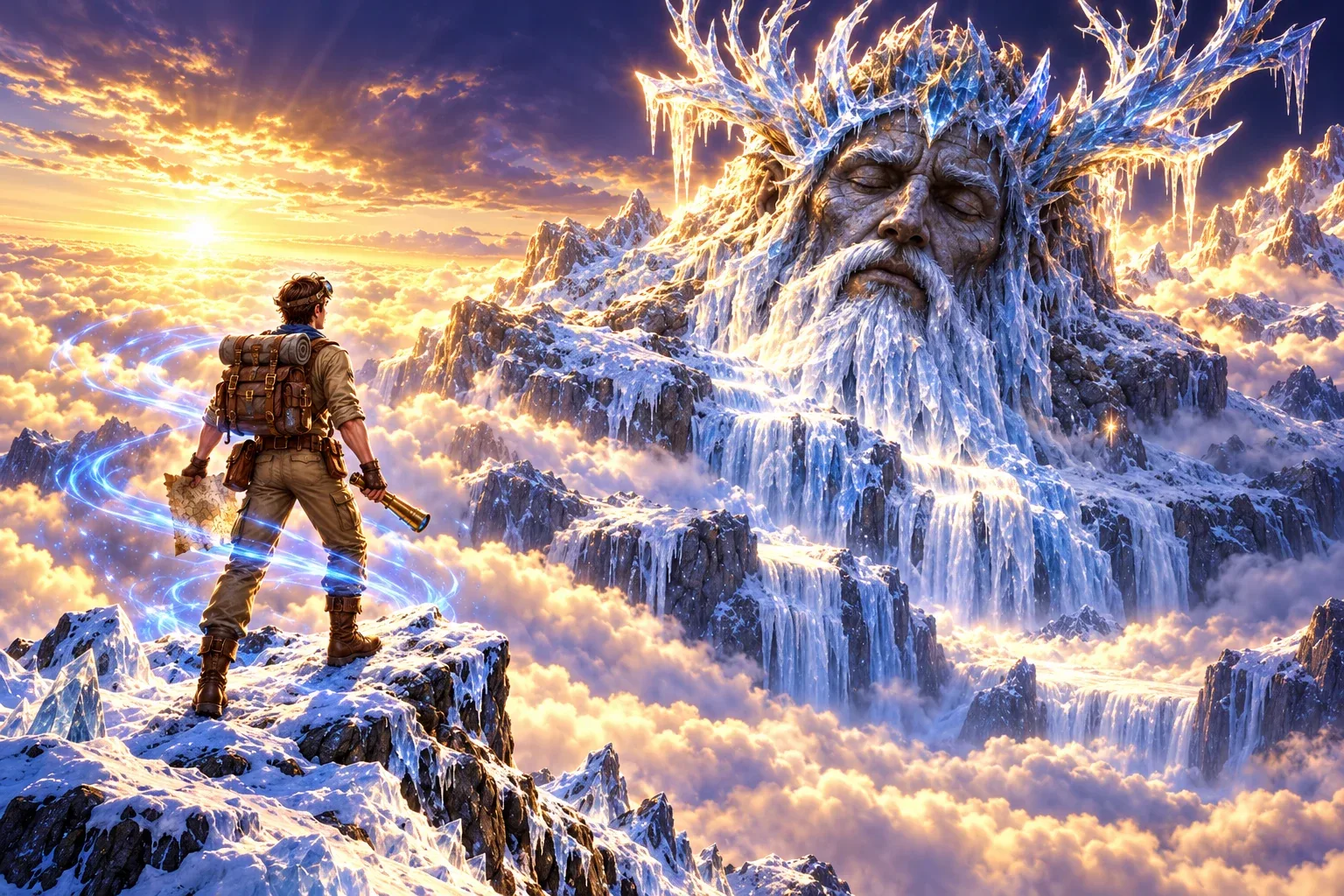
He walked the iron plains, and followed Orrun's straight ridges from end to end, and understood that no river had cut them. He climbed a pillar that lay across a valley like a fallen bone, a hundred miles long, and saw that it was worked: notched, at perfect intervals, by a hand larger than the world. He went down into the sea caves of the Turning and heard the water speaking, and did not know the words, but knew the voice was old, and awake.
And he came back from each place with a map.
He drew them on old parchment, wherever he stopped, and he left them with the people where he slept. He drew the passes and the shores, the wells and the rocks and the river crossings, and the straight ridges, and the rings. He drew the face in the mountain.
The people copied the maps and passed them on, and the maps went where he did not. A child of the Held, who had never left her valley, knew from a map that the sea existed. A boat of the Turning, far from home, knew from a map which shore was safe. The world, which had been vast and dark beyond every firelight, began to have edges, and shapes, and names.
And the small gods of each place grew a little steadier. A well that is on a map is a well that others know of, and need, though they have never drunk from it. The god of that well did not go out in the dry season. It held.
She saw it from the ridge. She did not yet understand it.
At the far north of the world, beyond the last of Kharn's high passes, where the glacier runs down into the cold beneath the cold, the Explorer came at last to a place he could not draw.
It was not dark there. It was not hidden. He stood upon the ice in full daylight and looked at it through the brass glass, and saw nothing that should have stopped him: a long slope of snow, a crevasse, a sky.
But when he set it down on the parchment, the ink would not stay. He drew the slope, and it was not there. He drew the crevasse, and the page was blank.
He tried for a whole day. Then, for the first time since he had been born on the headland, he was afraid, and he did not know why, and he turned away, and he did not go further in.
On every map the Explorer ever drew of the north, there is a place at the top where there is nothing at all.