
The Forgetting
4 min read
“There was a village called — there was a village.” Fragment of the Held, unfinished
The Hollow had waited an age beneath the ice, and it had not hungered, for there had been nothing to take.
Now the world was full of need. There were fires on every plain and gods over every field, and every person wanted, and every want pulled. It reached the Hollow even in the cold beneath the cold. It was like a sound it had not heard since the Elders: the whole world calling out I need, I need, I need.
It rose to answer, as it had always answered. It rose to take the need away.
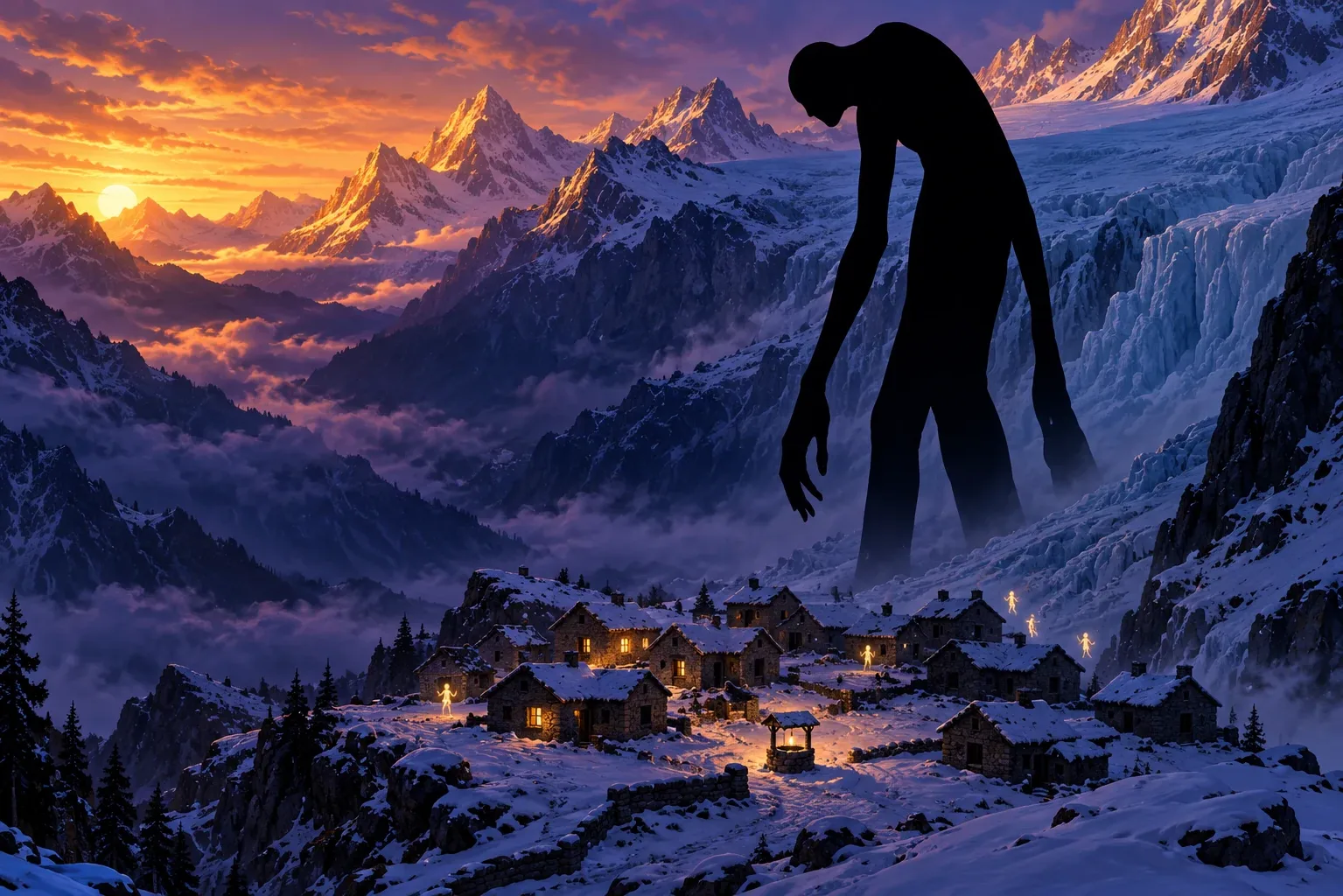
The first village it came to was a village of the Held, at the very top of the world, where the glacier met the last valley. Its name was Ossendar. It had nine houses, and a well with a god in it, and a god of the door who kept the winter out, and a god of the long night who sat by the fire and was warm. Its people kept the bones of their grandmothers in the walls, so that nothing loved would ever leave.
The Hollow came down out of the white place at dusk.
It was as it had always been: a shape cut out of the world, tall and stooped and thin, its small head bowed. The snow did not touch it. The light did not fall on it. It did not hurry. It did not need to.
The gods went first. The god of the long night stood up from the fire, and turned toward the door, and went out, as a candle goes out. The god of the door went next. The god of the well sank down into the water, and there was no more water.
Then the people.
They did not die. Nothing in Ossendar was broken, or burned, or slain. It was only that a woman, putting her child to bed, could not remember his name, and then could not remember why she had been standing in that room. It was only that the bones in the walls became bones, and no one could say whose. It was only that, by morning, in all the valleys of the Held, no one could remember that there had ever been a village at the top of the last valley, or that anyone had ever lived there, or that anyone had ever needed to.
And what is no longer needed fades.
By the next nightfall there was a long slope of snow at the top of the last valley, and nothing on it.
It went on.
It took a village of the Held, and then three more. It took a fishing god of the Turning, and the boat that god had kept, and every song the Turning had ever sung about that boat. It took a ring of the Measured on the northern plain, with all its fields and quarrels, and left a ring of iron sunk in the grass, and the Measured to the south looked at it and thought it had always been empty.
No one fought it, because no one knew it was there. No one fled it, because no one remembered what it had taken. That is how the Hollow wars. There is never a battle. There is only, each morning, a little less world, and no one to miss it.
The Explorer came back over the high passes in the spring, with the new maps in his pack, and went to Ossendar, because he had slept there once and drawn its well.
He stood at the top of the last valley on a long slope of snow, and there was nothing there.
He did not know why he had come. He stood there for a long time, with the wind turning about him, troubled, like a man who has walked into a room and forgotten why. He nearly turned away.
Then he took out his maps.
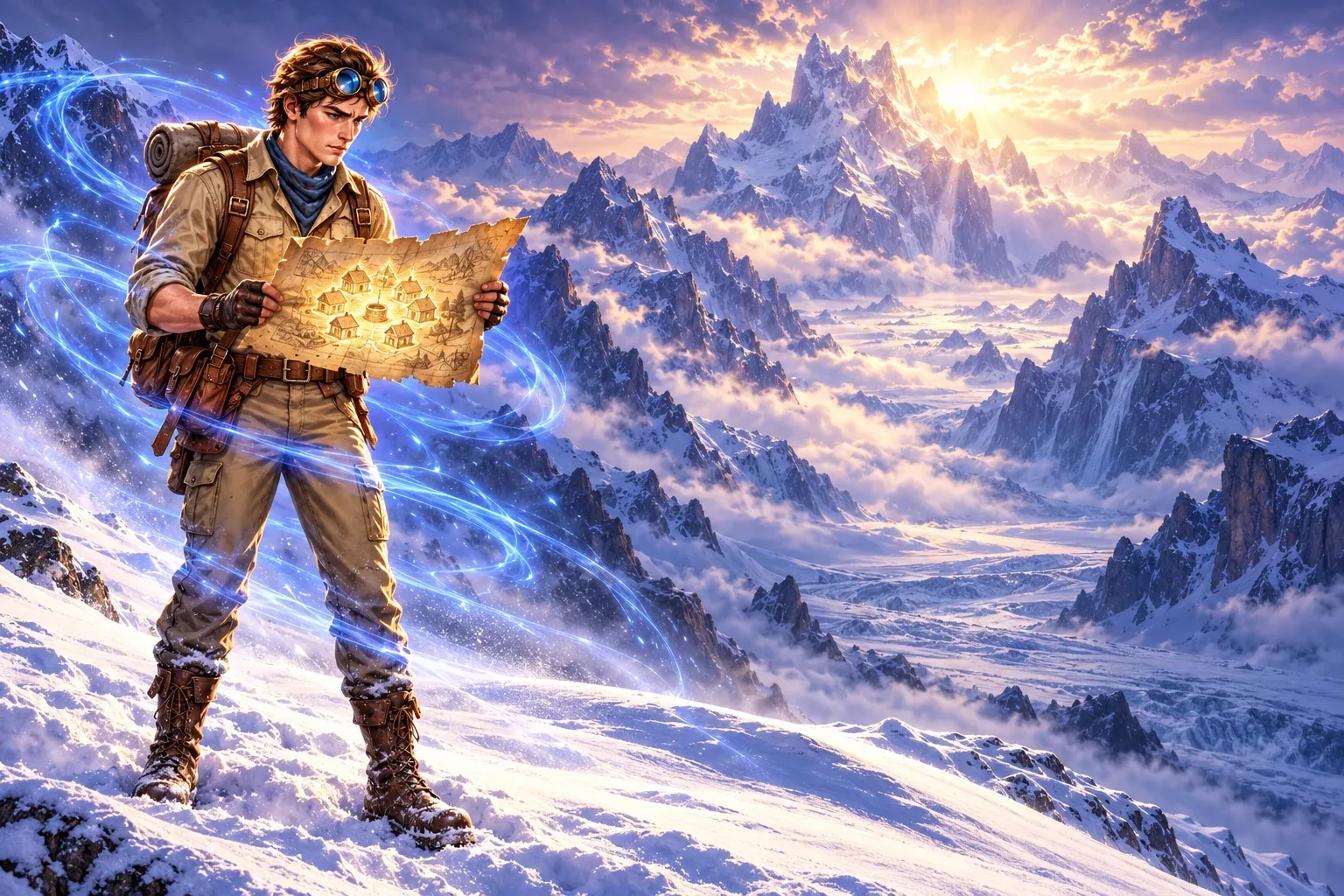
There it was, in his own hand. Nine houses. The well, with a small mark beside it for its god. The path down the valley, and a note about the ice in spring. Ossendar.
He read the name aloud, and as he read it he remembered, a little: a fire, a bowl of something warm, an old woman who had asked him about the sea. It came back faint and thin, like a voice from another room. But it came back.
What is drawn on a map is known, though it is gone. And what is known is needed, a little, by someone. The Hollow can take a village. It cannot take a village that is written down somewhere it has not yet been.
He did not stop to understand it. He was not made to stop.
He went down through every valley of the north with the map in his hand, and told every village of the Held the name of every village above them, and showed them where it was drawn. Some of them remembered. Most did not. All of them looked up the valley afterward, uneasy, as people look at a door that should not be open.
Then he turned south, toward the ridge where the tall figure stood against the dawn, which the people told stories about and had never understood. He did not know why he went there. He knew only that he had a map of something no one could see, and that someone needed to decide what to do with it.