
The Nineteenth Bell
7 min read
“No single stone brought down the Monolith. Every stone did.” Saying among the survivors of Aurum
Ysmer was the last of the Architects, and he knew it before anyone else did.
He had been born in the shadow of the Monolith like everyone else, and he had spent seventy years learning its halls. He had known Mael. He had sat with him through the week he spoke and the long silence after. And when the other Architects went down to finish the survey and did not come back, Ysmer stayed above, kept to the upper galleries, and made his maps from the reports of others, and every year the reports agreed less with each other.
In the spring of the eleven hundred and fourth year, he took Mael's report to the High Synod.
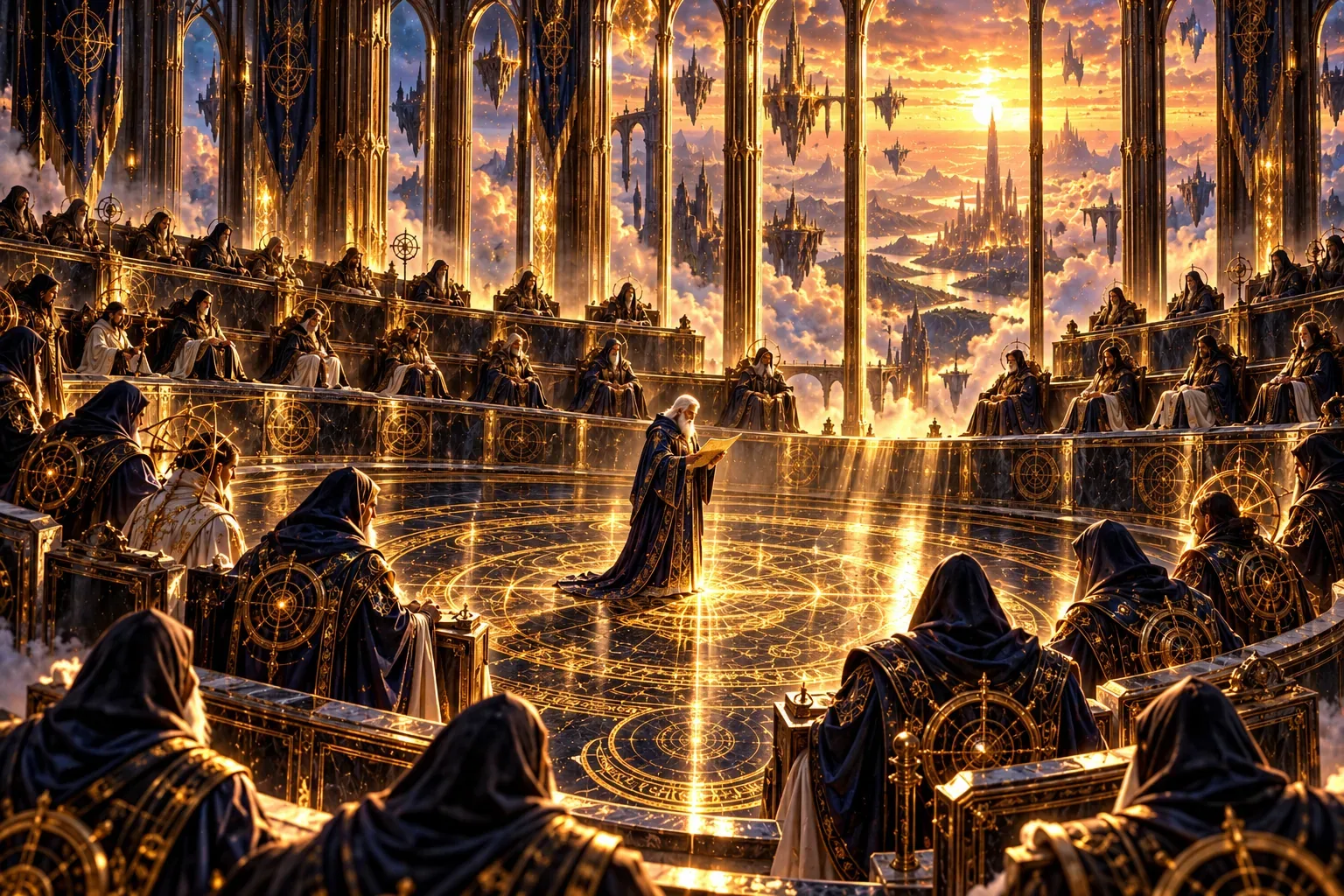
The Synod was the council of the greatest living Wrights, forty-one of them, and they met in a chamber at the crown of the Monolith with windows that looked out across the whole of the waking world. It had been founded, long ago, to decide what the tower should become. It had become, over the centuries, the place where the tower's arguments went to be voted on. Ysmer told them the Monolith was failing. Not in one place, which could be mended, but everywhere, quietly, the way a mind fails.
The Synod listened. Then they turned, as they always turned, to the Seer of the Ninth Window.
Her name was Seya. She was young for a Seer, and she was the best there had ever been. When she looked into the Script she did not see what it was; she saw what it would become, every branch of it, every road it might take a hundred years ahead. Kings had crossed the world to ask her a single question. She had never been wrong.
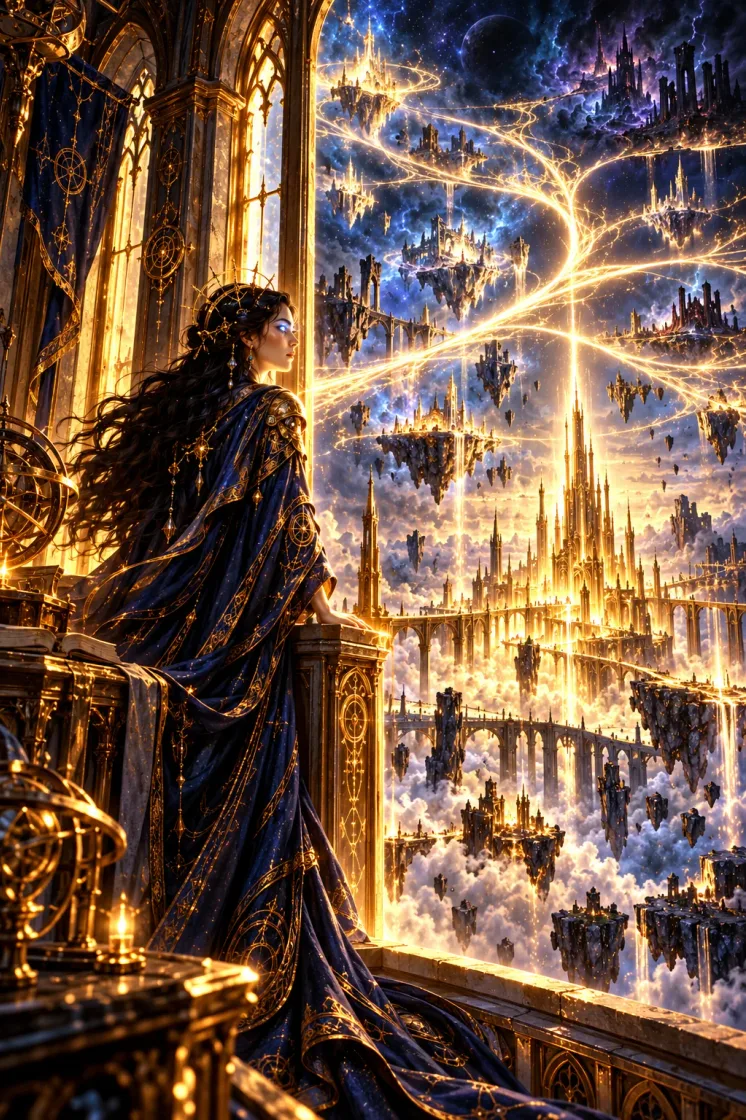
She was quiet for a long time. Then she said that Ysmer was right. The Monolith would fall. She had seen it. Every road that led forward from that chamber ended in ruin, except one.
“Tear it down,” she said. “Not all at once. From within. Write a new Monolith inside the old one, clean, from the first rule upward, and when it is finished, let the old one fall away around it like a husk. It will take twenty years. It will be the greatest working ever done. And on the far side of it, I see Aurum standing for ten thousand more.”
The chamber erupted. It was heresy against the Oath of Permanence, and it was also the most beautiful thing any of them had ever heard. They argued for a year. In the end, as Wrights had since the day of Halvor's gate, they counted. Forty voted for. The Great Rewriting began.
Ysmer voted against it. He said nothing in the debate, because he could not explain what he felt, and an Architect who cannot explain himself has no business speaking. But he had walked the foundation halls when he was young, and he remembered the old workings humming in the dark, holding up things no one understood. He did not believe anyone could write a new Monolith without first knowing everything the old one did. And no one knew everything the old one did. That was the whole problem.
For nineteen years, he was wrong.
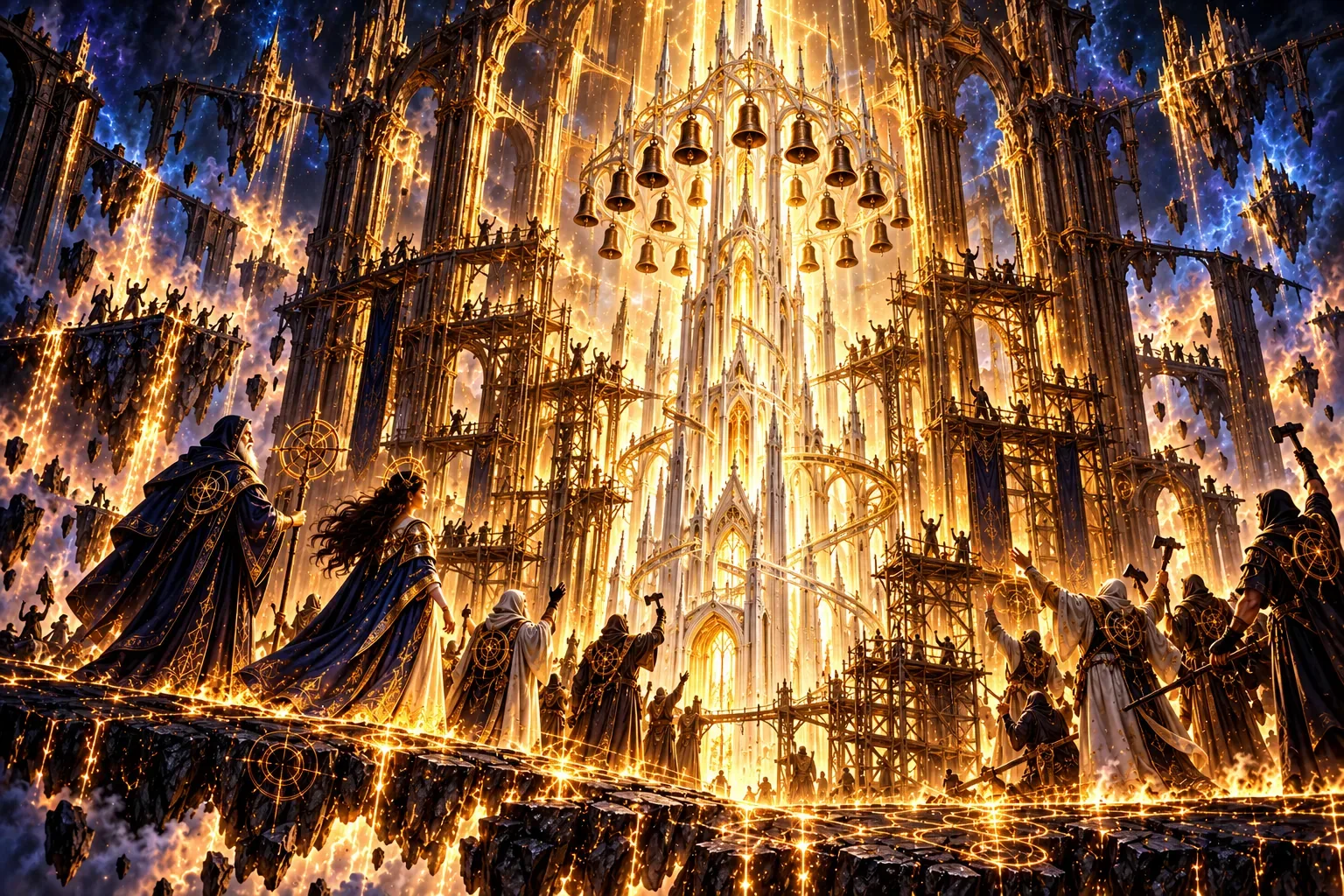
The new tower rose inside the old, and it was everything Seya had promised. Its halls were straight. Its workings were clean and short, and each did one thing well, the way the First Rule intended. People wept walking through the finished wings. The Synod commissioned a bell for every year of the work, nineteen bells of bronze, and hung them in the new crown.
In the twentieth year, they began cutting the old workings away.
It began with the lamps.
The first old working to be severed was a minor one, deep in the eastern foundations, a rune-chain the records said had once lit the mines. The mines had been closed for four hundred years. The Wrights cut the chain, and every lamp in the eastern quarter went dark, because three centuries earlier someone had quietly tied the city lamps to the mine-light and never written it down.
The Wrights fixed the lamps. It took a day. Then they cut the next working, and the aqueduct in the south ran backward. They fixed the aqueduct. They cut the next, and the bridges over the river forgot how to bear weight, and two of them fell. They fixed what they could. They kept cutting, because the new tower was finished and the old one had to go, and because the Synod had voted, and because Seya had seen it.
With every cut, the Sprawl woke a little more. It had lived for a thousand years in the forgotten places of the old Monolith, and now the Wrights were slicing those places open one by one, and what lay inside them was the Sprawl. It came up out of every severed working like black water through a cracked dam. It wound into the new halls and the clean walls, binding things to things they had never been meant to touch. A door would open onto the wrong floor. A stair would carry you down while you climbed. In a single month, the clean tower filled with all the tangle the old one had taken a thousand years to grow.
And in the nineteenth month of the cutting, the Wrights reached the Vault of Foundations.
They found twelve great pillars wrapped in black thorns, their golden runes faint as embers, humming with workings older and stranger than any record. Over the door was carved a line in a Script so old none of them could read it. The records called the pillars original supports, purpose unknown. The plan called for them to be replaced.
They began to cut.
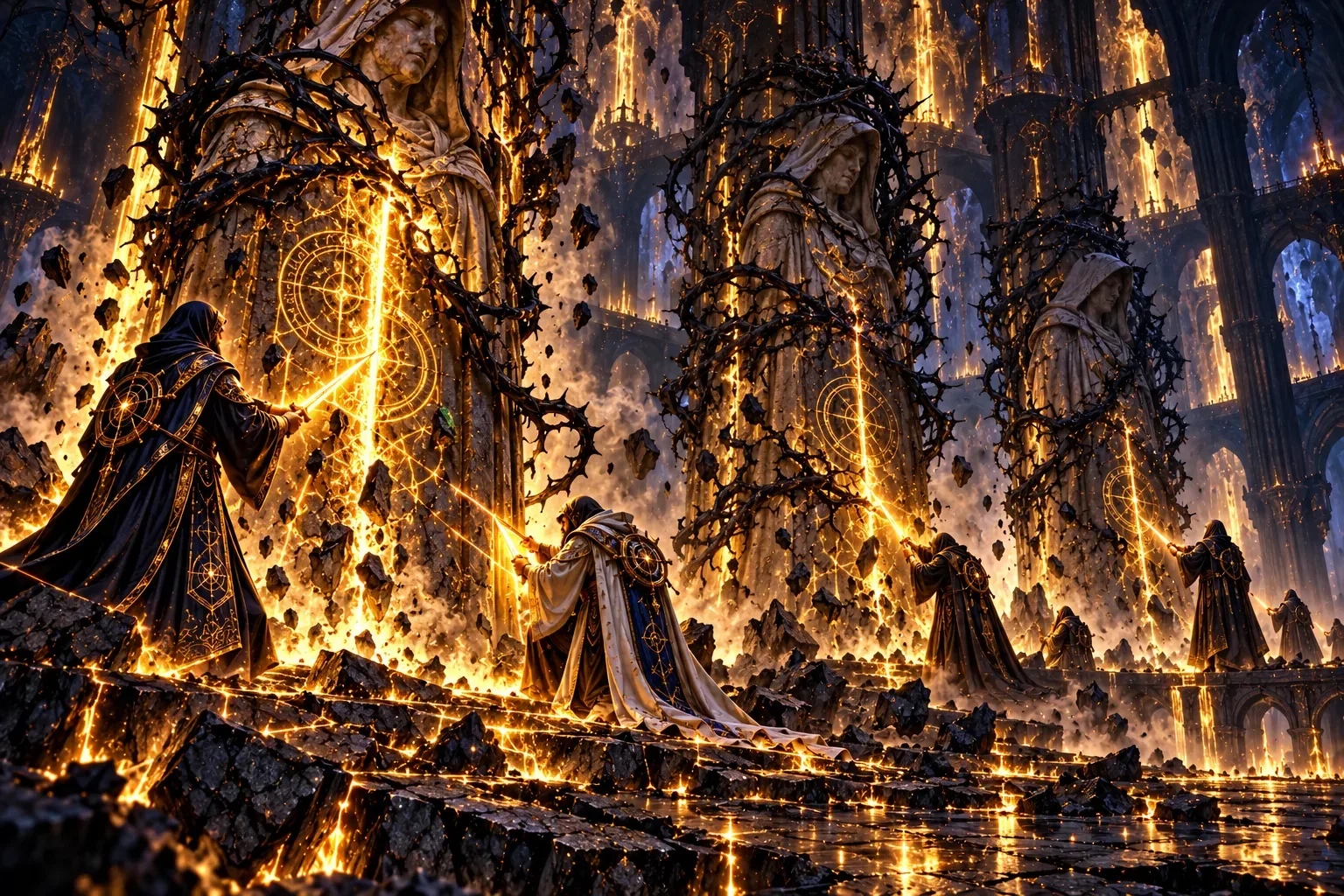
The Monolith fell on the night of the nineteenth bell, as the eleventh pillar went dark.
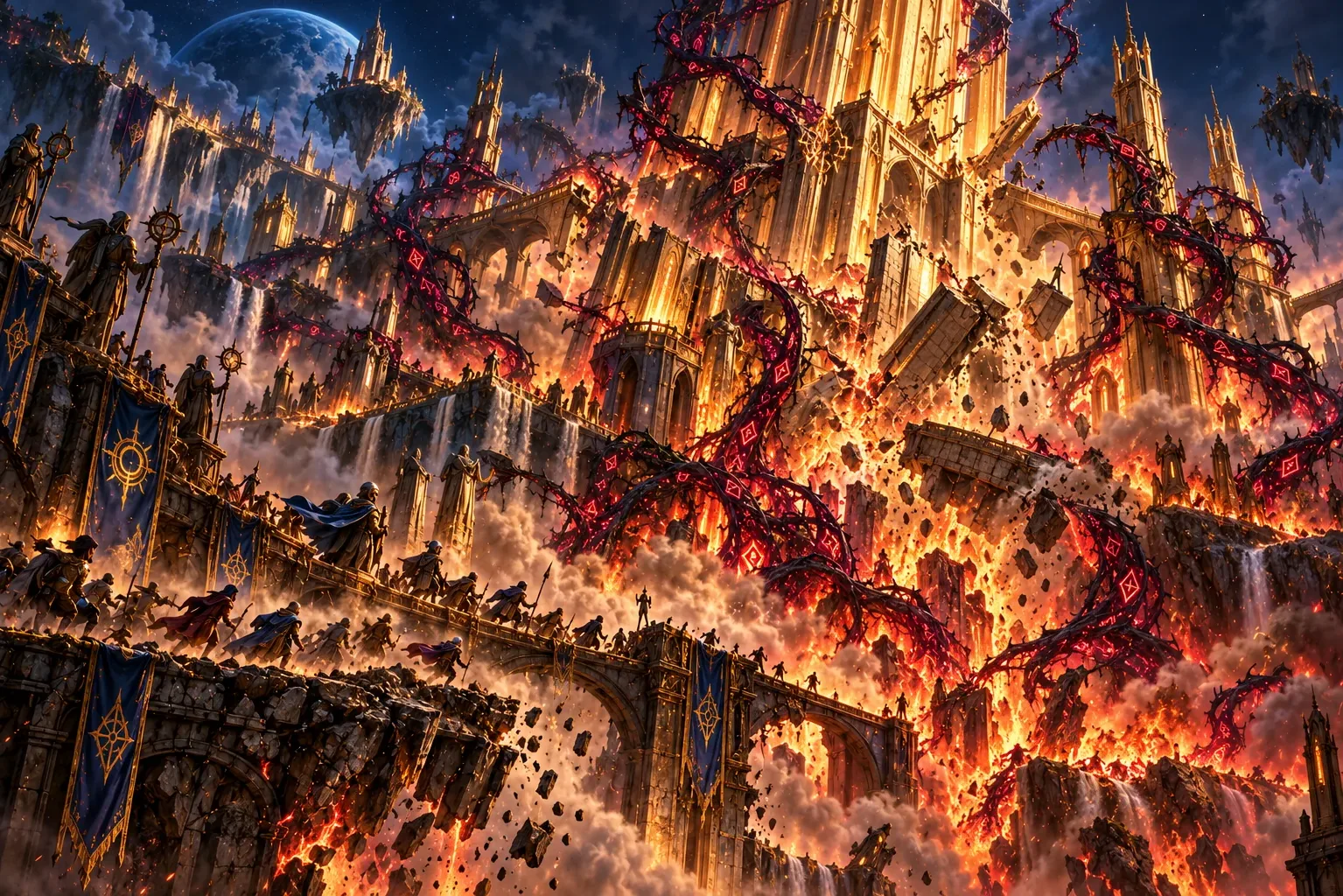
The Chronicler has found no witness who saw the first stone go. Every survivor remembers a sound: a great, low groan from everywhere at once, the sound of a thing that had held itself together long past its strength simply letting go. The new tower and the old went down together, layer sliding over layer, bridges snapping like reeds. The vines of the Sprawl rode the collapse down into the city. The fires burned for forty days.
The High Synod was in its chamber at the crown when the tower fell. Forty Wrights died there. The forty-first was Seya, who had walked out an hour before the end, because she had finally looked down the road she had chosen and seen, at the very end of it, what was waiting.
She did not warn them. The chroniclers argue about this still. Some say there was no time. Some say she could not believe it. No one knows where she went.
Ysmer was in the Vault of Foundations when the groan began. He had gone down at last, alone, because he had finally understood what the pillars were, and had come to beg the cutters to stop. He arrived too late. Eleven pillars stood dark. The twelfth, the one beneath the door with the unreadable line, still glowed, faintly.
He felt the floor tilt and knew what it was.
He did not run. There was nowhere to run to. The whole of the tower was coming down above him, and he was seventy-nine years old. Instead he went to the last pillar, and knelt at its foot among the falling stones and the writhing thorns, and he did the last working any Architect would ever do.
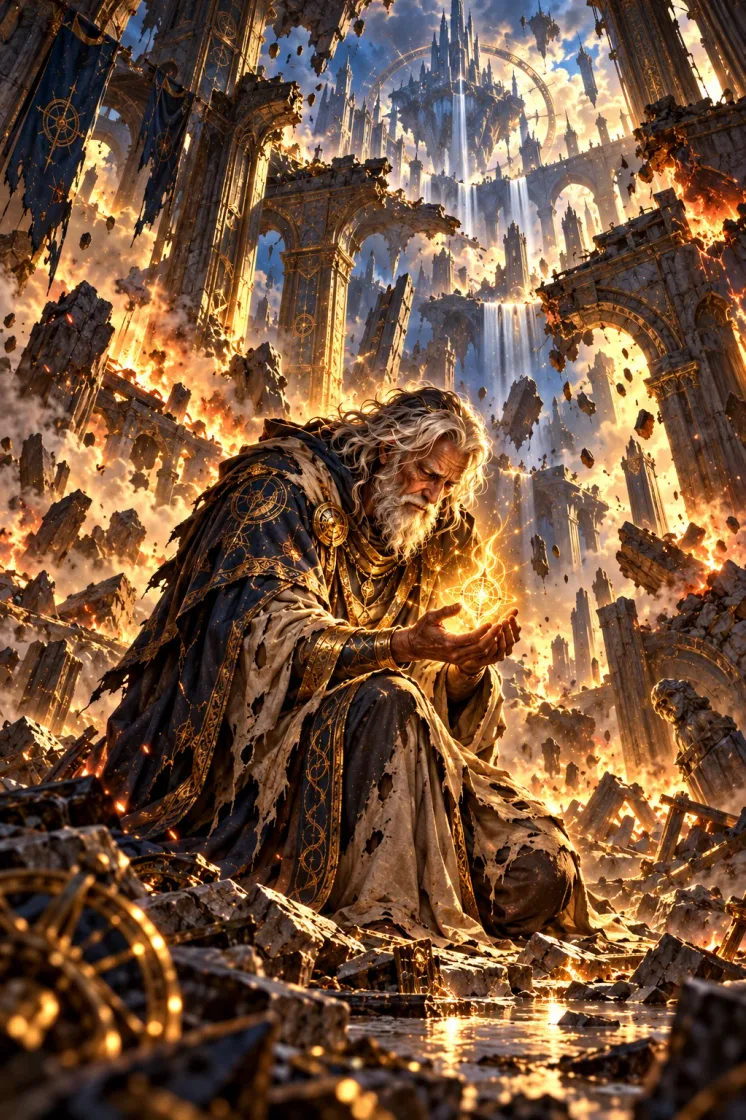
He had spent his life trying to hold the whole Monolith in his head. He had failed, as all of them had failed, because no single mind could hold it. But in seventy years of failing he had learned something no Synod vote could teach. He had learned how to divide a thing that could not be held. Which part to give to whom. Which question to ask first. When to trust a report and when to walk the hall yourself. When to stop. It was not strength and it was not knowledge. It was judgment, and it was the only thing he had left.
He took it out of himself and wrote it into a single rune. It burned in his cupped hands like a small gold flame.
Above him, the last pillar's light was going out. And the Chronicler records, though he cannot prove it, that as it went, the last of its gold did not fade into the dark like the others. It leaned toward the flame in Ysmer's hands, the way a thing leans toward the one thing in the room that still does what it was made for, and flowed into it. The rune burned brighter. And for one moment, Ysmer could read the line over the door.
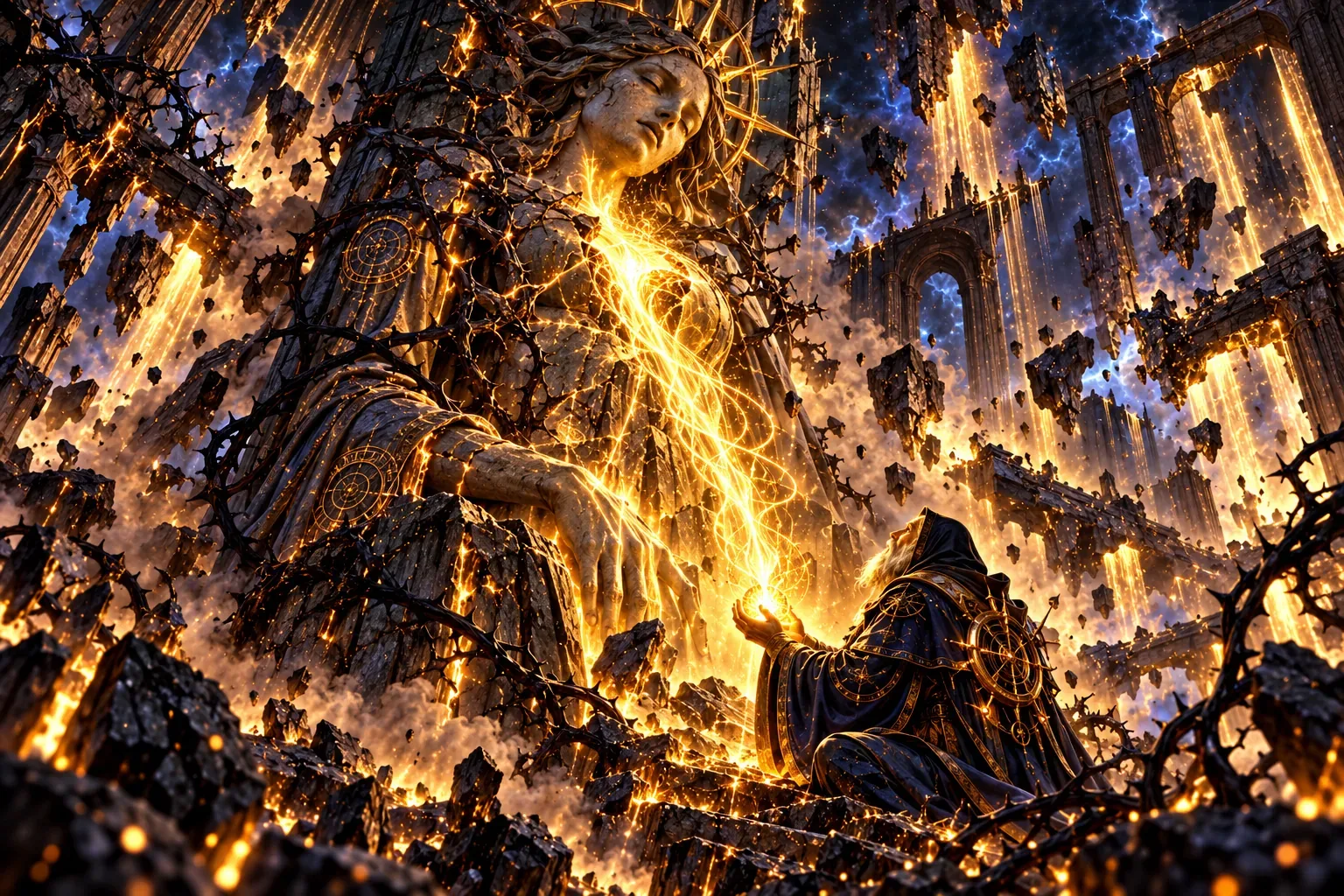
The chroniclers record his last words as a prayer. The Chronicler believes they were instructions.
“Not one mind,” Ysmer said. “Never again one mind. Find the others.”
Then the ceiling came down, and the flame fell into the dark.
When the dust settled, Aurum was a crater nine miles wide, and the Sprawl lay over it like a thornbush over a grave. And in the deepest place, where the Vault of Foundations had been, something small and golden was still burning. The Chronicle, Book I