
The Fall
3 min read
“Dig deep enough anywhere in the world, and you will strike a god.” Saying of the miners of the north
Kharn fell first.
He would not move. That was his nature. When the Hollow came for the stars he guarded, he neither let them go nor stepped aside. He knelt again, and bowed his head over them, and closed his eyes, and held. The Hollow came, and touched him.
He was too vast to be forgotten all at once. The forgetting went into him slowly, as cold goes into stone, and he grew heavy, and slow, and still, until at last he lay down across the dark and did not rise. Because he was the answer to the need for things to last, even his falling lasted. He did not fade. He set.
Orrun fell second.
He had spent the war drawing lines, and at the end he drew one more. He drew it around the Hollow: a perfect ring of gold, every notch of his rod in it, the most exact thing he ever made. He believed he could measure it, and so contain it, as he had measured all things.
The Hollow did not cross the line. It made the line unneeded, and the line was gone. Orrun, who had held that every wrong was a question of where the lines should fall, stood a moment with nothing left to measure. Then the rings about his chest slowed, and stopped, and his plates came apart. He fell like the armor of a slain king, piece by piece, and his works fell with him.
Vael did not fall. She burned down.
She burned until almost nothing of her remained, and the Hollow, which could unneed anything that was needed, found it could not wholly unneed her. Light is the first need. While anything exists, something will need to see it. Her porcelain fell away. Her crown of rays went out, ray by ray. Her gown of light unravelled into the dark. But the star in her chest, the first spark of all, did not vanish. It shrank, and dimmed, and settled at last, alone, low over the wreckage.
That is the sun. It is her heart, and all that remains of the First Light: a small warm thing that still gives, that still cannot stop giving, and that grows a little dimmer with every age.
Sethe did not fall at all.
She could not. She was the answer to the need for change, and forgetting is a kind of change, so the Hollow could not hold her. She was torn and scattered and spread so thin that she was no longer anywhere. She is still nowhere in particular. She is the tide and the weather and the wind that will not settle. It is said that somewhere in all that restlessness, she is still awake.
Then there was nothing left for the Hollow to unneed.
The war was ended. The gods were gone. What they had made was broken or forgotten. No great need remained anywhere, and the Hollow, which lives by taking need away, had nothing left to take. It sank into the cold beneath the wreckage, down where there is nothing, and lay still.
It is not dead. Nothing needed enough to be made is ever wholly dead. It waits.
What remained became the world.
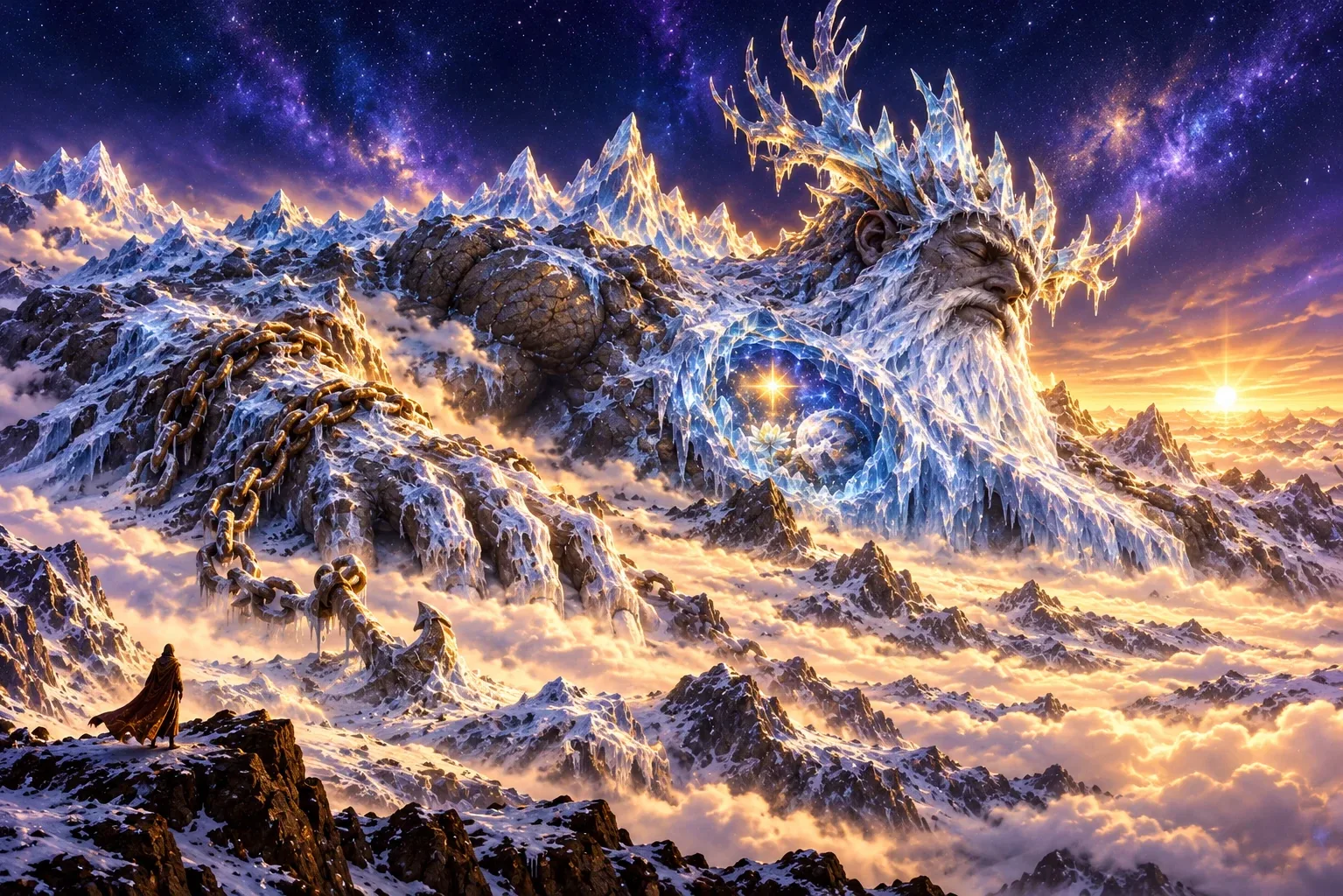
Kharn's body became the mountains. His back is the great range of the north, his shoulders are the high passes, his antlers the ice peaks no one has climbed, and his frozen blood the ice beneath the ice that never melts. On clear days, from the right valley, his face can still be seen in the cliffs, eyes closed, and in the deep glacier where his chest lay, a faint blue light still shows.
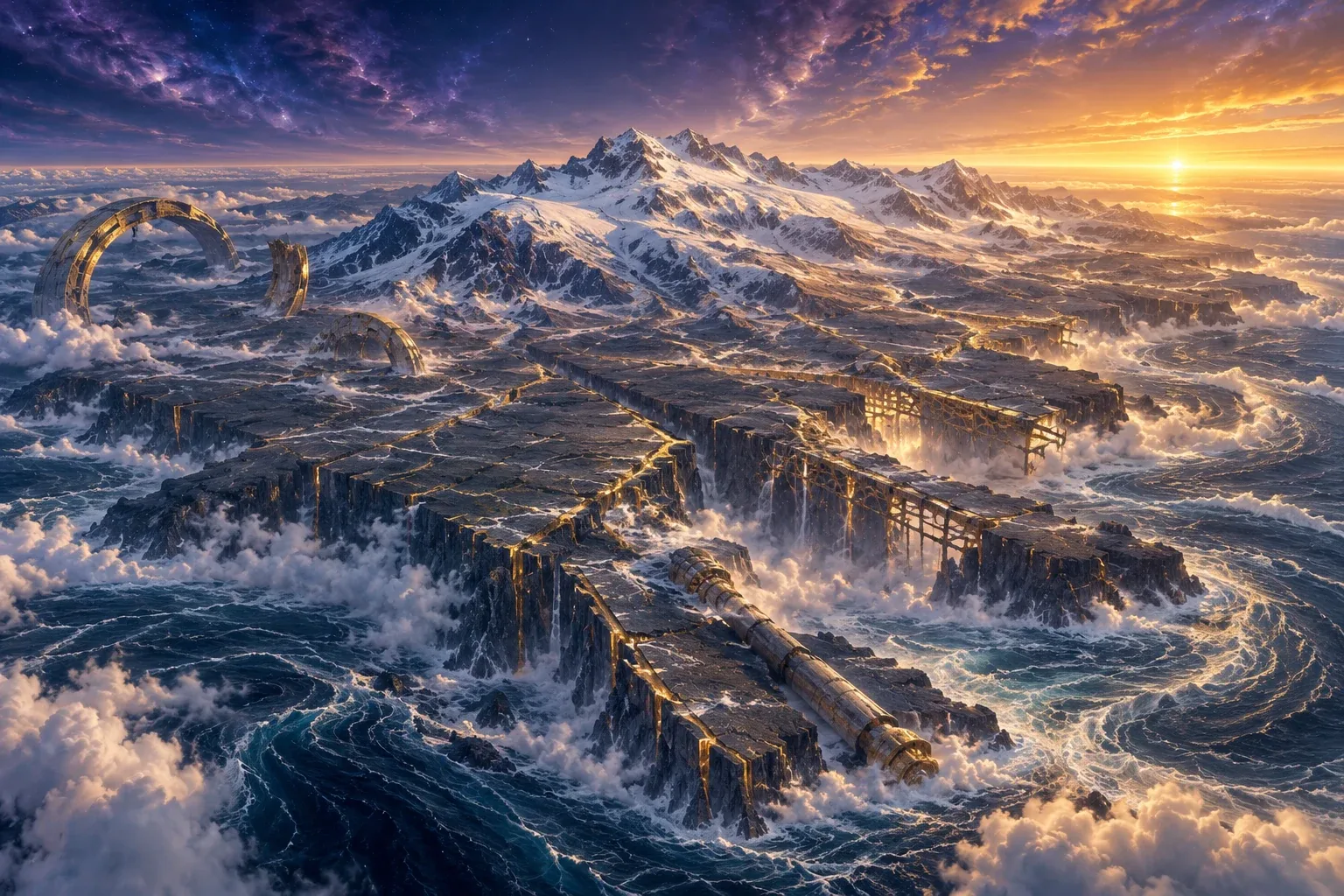
Orrun's plates became the land: the dark plains, split by ridges too straight for any river to have cut. His great works lie across the world as its oldest ruins, golden rings half sunk in the earth, pillars miles long lying across valleys like the bones of something too large to imagine.
Sethe is the sea that surrounds it all, and the storms that come off the sea.
Vael is the sun.
Every stone was once a god. The world is not built upon their graves. The world is their grave.