

The First Rule
5 min read
“Let each thing do one thing, and do it well.” The First Rule, carved by Ilyth on the black stone
In the beginning, the Wrights made things by wanting them.
Ilyth wanted light, and there was light. It hung in the Silence beside the first spark, a soft globe the size of a fist, and the Twelve gathered around it in wonder. It lasted the span of a single breath. Then its edges grew thin, the way a breath fogs a cold glass and then fades, and it was gone, and the Silence was exactly as it had been.
That was the first time any of them met the Undertow.
They tried again. They made a tree whose leaves were made of the gold of the first spark, and it stood for a day before the Silence drank it from the roots upward. They made a river of light that ran in a circle around them, and it slowed, and thinned, and stopped. They made an arch, simply to have made something with an inside and an outside, and watched it crumble into drifting runes that faded as they fell. For an age, the Wrights made and lost and made again.
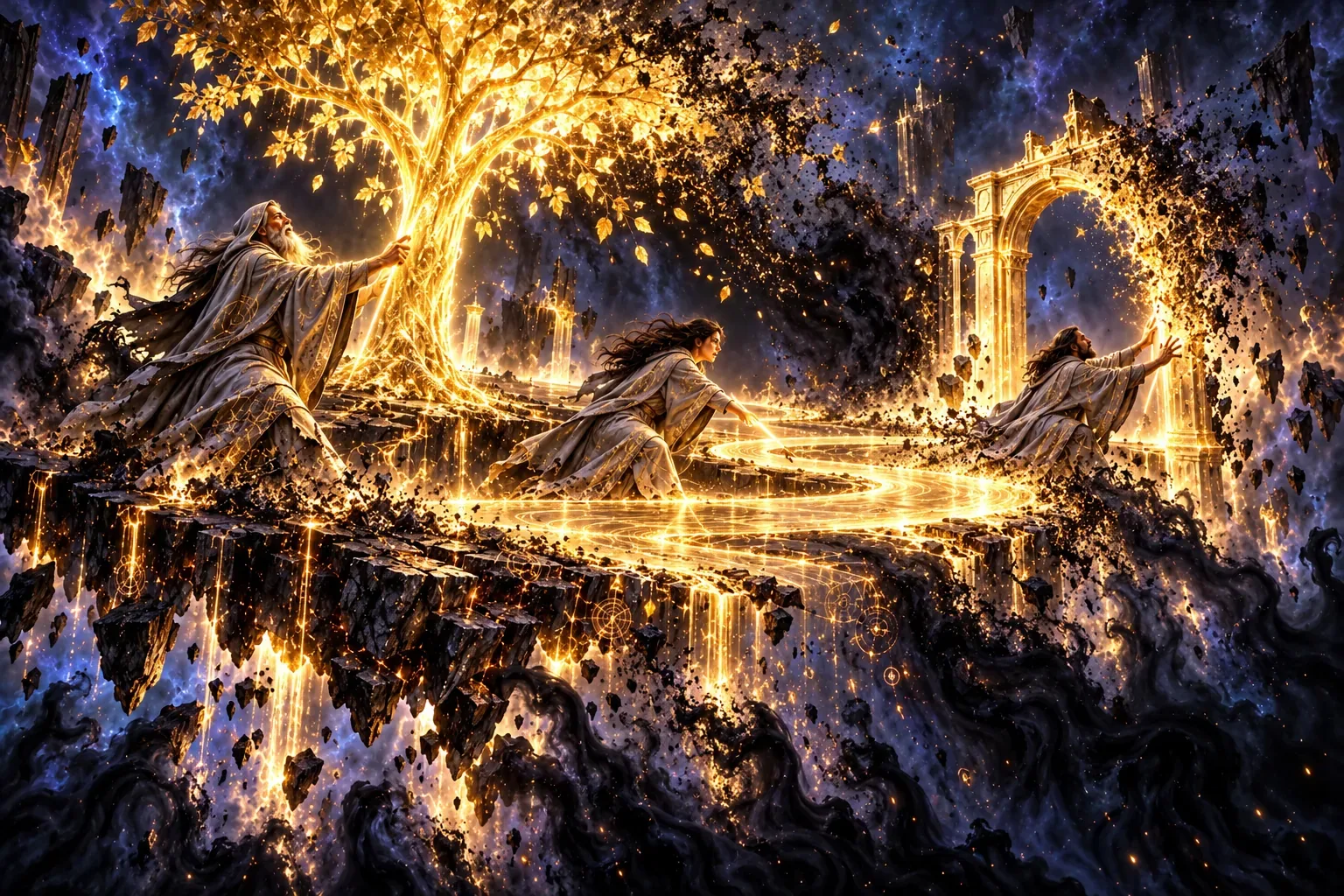
It was Ilyth who noticed the pattern.
The things that dissolved fastest were the ones made with the most longing. A light that was also warmth and also music and also a kind of comfort came apart in a heartbeat. A light that was only light, and nothing else, lasted a little longer. A tree that was only a tree lasted longer than a tree that was also a shelter and a clock. Whatever tried to be everything gave the Undertow everywhere to pull. Whatever did one thing, and only that thing, gave it almost nowhere.
Beneath the Wrights' feet, where they had stood for so long, the Silence had grown hard, the way snow packs to ice under a long tread. It was the first stone. Ilyth knelt on it and, with a stylus of light, carved the First Rule into its face.

Let each thing do one thing, and do it well.
The rule did not dissolve. It was the first made thing that lasted.
From the First Rule came a second, carved by the Wright who had heard what should it be called?: Name each thing truly. A thing with a true name could be found again; a thing with a false one would be lost even while it stood in plain sight. From the second came a third, carved by Ilyth again: When a thing is no longer needed, unwrite it cleanly, and leave its place clear. The Undertow could not be beaten, she argued, only bargained with. Give it back what you no longer need, and it will be slower to take what you do.
From the rules came the runes, and from the runes came the Script, the language in which all things are written. A Wright would carve a line of Script and a wall would stand where no wall had been. Carve another and the wall had a door. Carve a third and the door opened only for those who knew the word. Each line did one thing. Lines joined to other lines, each still doing its one thing, and together they made things far larger than any single line could hold.
With the Script, the Wrights wrote the world. They wrote ground beneath the first stone, and sky above it. They wrote rivers that ran downhill, because they had learned from the Undertow what downhill was. They wrote seasons, so that things could rest. And in the forty-first year of the Script, a Wright wrote a working so intricate that it could ask the question for itself. It looked around at the world and wondered what it was for. The Wrights called it a person. In time there were many.

But the Undertow never stopped. The Wrights learned that nothing written is ever finished. A working had to be tended, mended, read again to be sure it still did what it said. And when it was no longer needed, it had to be unwritten, as the third rule said, so its place could be used again. It was hard, endless work. Most of the Twelve came to find a kind of peace in it.
Halvor never did.
Halvor, who had heard how will we keep it?, had loved the first lost things more than any of the others. He had wept when the golden tree went. He had tried to hold the river of light together with his hands. Long after the others had moved on, he would sit at the edge of the first stone and stare at the place where the arch had been.
The third rule tormented him. Every time a Wright unwrote a working, however small, however useless, Halvor felt it as a defeat. Every unwriting is a gift to the Silence, he told the others. We are doing its work for it. We are handing it, piece by piece, the world we fought to make. He grew gaunt. His light, which had been as bright as any of theirs, took on a greyish cast, like a lamp seen through smoke.
Ilyth argued with him for a hundred years. Clearing is not surrender, she said. A field must be cleared before it can be sown. A thing kept long past its use does not defy the Undertow; it feeds it, because no one tends what no one needs, and what no one tends, the Silence takes from within.
“You say that,” Halvor answered, “because you have never lost anything you loved.”
It was not true. But Ilyth had no answer to it that he would hear.
At last Halvor went alone to the great gate the Wrights had raised at the edge of the written world, and on its face, in letters taller than himself, he carved the Second Law.
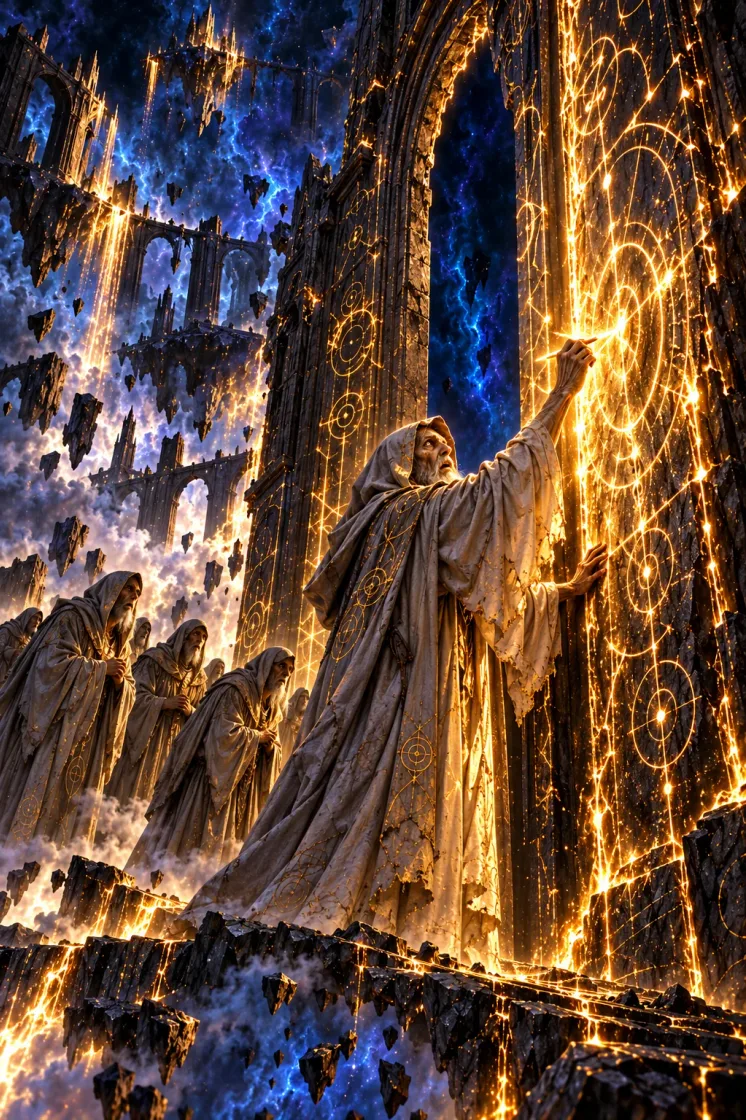
What is built shall stand.
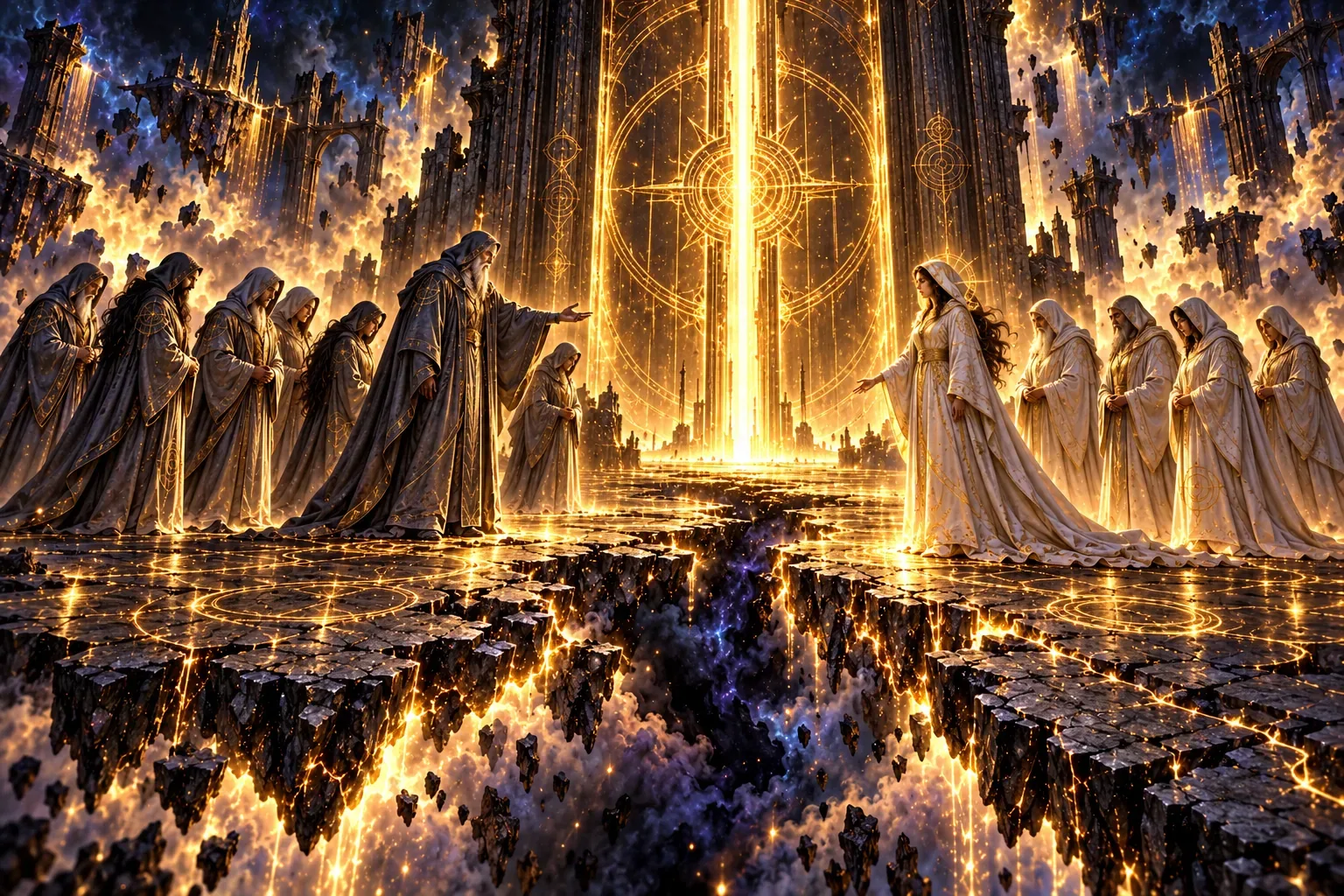
The Twelve gathered before the gate. They argued for a season. It was the first time they could not reach an answer by understanding one another, and so, for the first time, they did something else. They counted. Seven stood with Halvor. Five stood with Ilyth. The Second Law was accepted, and it was named the Oath of Permanence, and from that day every one of them swore it.
The Chronicler asks the reader to notice two things.
The first is that the Wrights had just learned to decide by counting instead of understanding. It would not be the last time.
The second is that Ilyth's third rule, unwrite it cleanly, was never unwritten. It could not be. The Oath of Permanence forbade it. So the two laws stood side by side, carved in the same stone, each saying the opposite of the other. It was the first contradiction ever written into the Script.
And the first thing the Oath of Permanence ever preserved was the rule it broke.